
The Problem
Cable-driven strength machines rely heavily on stable tension and smooth motion. Users feel every inconsistency.
Traditional motor systems often create:
- Small jumps in tension caused by cogging
- Lag or delay during drops, holds, and eccentric phases
- Noticeable noise during resistance changes
- Uneven force output during slow movements
- Difficulty maintaining constant tension over long cable travel
These issues disrupt the training experience and make digital resistance feel less like lifting real weight.
ECMpowered Integration
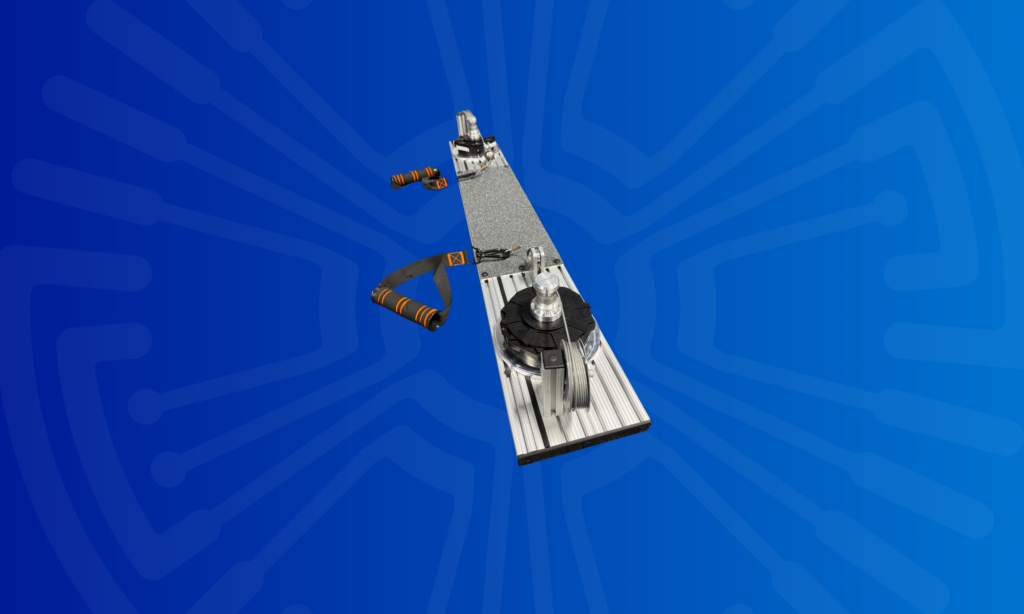
ECM built an adaptive cable-resistance prototype using a PCB Stator motor and ECM’s intelligent controller. The system was designed to keep tension consistent throughout the full cable stroke while delivering smooth, quiet digital resistance.
Key performance advantages
Smooth low-tension control – Zero cogging torque removes the “granular” feel common in motorised systems.
Fast torque response – The motor and controller adjust resistance quickly during dynamic sets such as eccentric overload, isokinetic training, or rapid transitions.
Accurate force delivery – Resistance is defined in software, allowing instant changes based on user performance or programmed workouts.
Quiet operation – With no belts, fans, or clutches, the system runs with significantly lower acoustic noise.
An industry executive summarized the difference:
“We tested nearly every electronic home-gym system at FIBO—this one was on a different level. The smoothness and precision are unmatched.”
This feedback reflects the central engineering outcome: ECM delivers frictionless movement and precision tension that mechanical stacks and traditional motors cannot replicate.